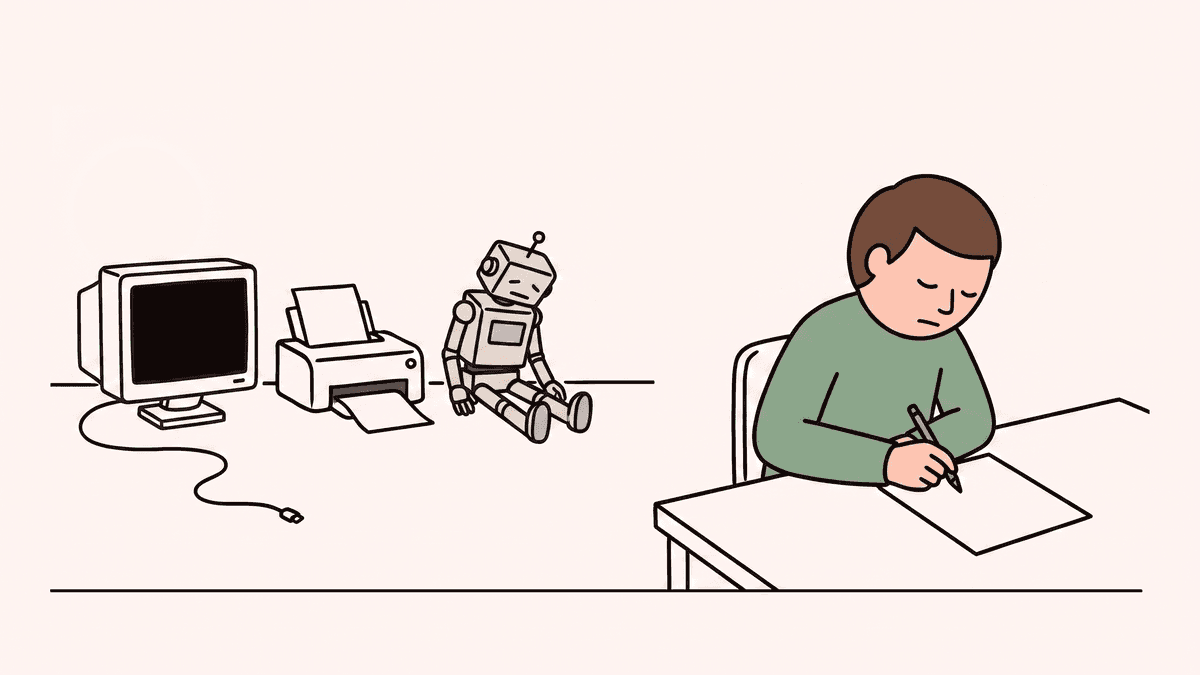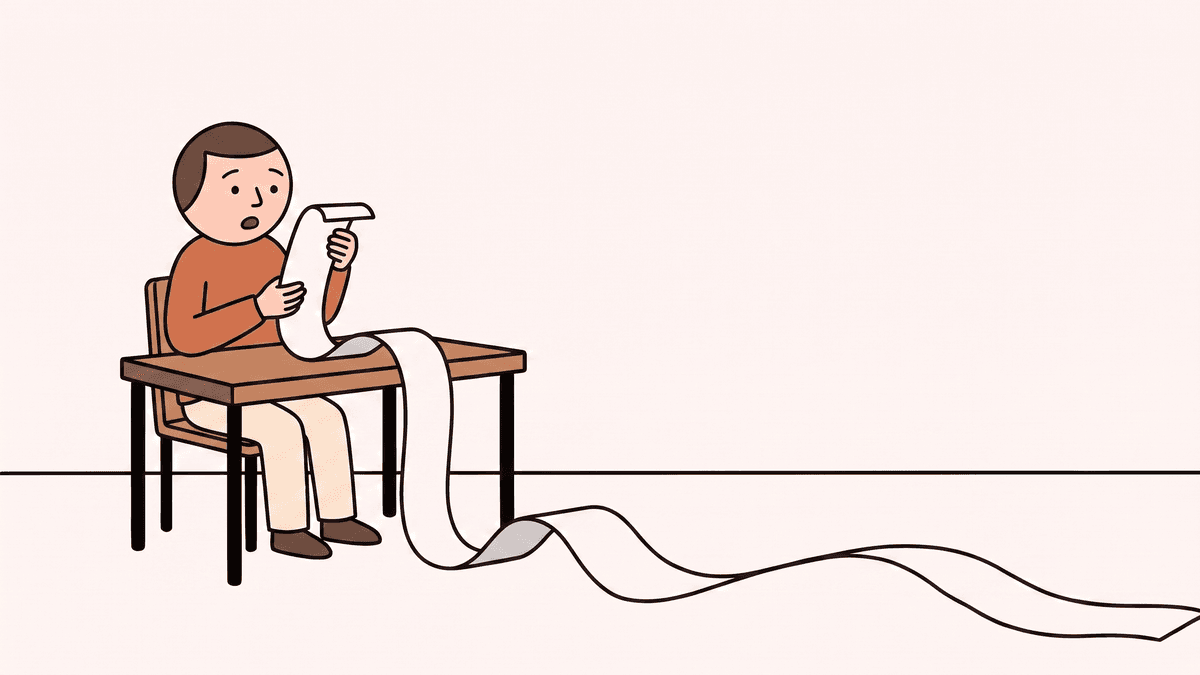
Pick any feature in your product that has been around for more than a year. Now ask three people — a PM, a senior engineer, and someone from customer success — to explain exactly how it works. Not the pitch. The actual behaviour. The edge cases. What happens when a user hits a limit, or tries something nobody designed for.
You will get three different answers. All partially correct. None complete.
The knowledge is there — scattered across people
Every product accumulates knowledge in individuals, not systems. The engineer who built the billing logic knows its edge cases. The PM who scoped the permissions model knows the trade-offs. The customer success lead who has fielded three months of tickets knows which behaviours confuse users. None of them holds the full picture — and none of them knows what the others know.
This is not a team communication problem. It is what naturally happens when a product grows for two or three years with a team that changes along the way. Atlassian's 2025 research found that teams waste 25% of their working week searching for answers that should already be documented. They are not searching because documentation does not exist — they are searching because the knowledge is fragmented across people, Slack threads, old tickets, and partially correct wiki pages.
The moment a key person leaves, the fragment they carried goes with them. We call this the bus factor, but we rarely treat it as the urgent problem it is.
Every release makes it worse
Here is what compounds the problem: every release adds behaviour. Features interact in ways nobody designed for. The permissions model affects billing. The notification system triggers differently depending on the plan tier. The onboarding flow has three variants based on how the user signed up.
Your product's surface area grows faster than any single person's understanding of it. After a year of weekly releases, you have a product that no one on the team can fully describe — including the people who built it. Only 3% of engineers completely trust their internal documentation (Port.io, 2025). The other 97% work around it.
This is not a maturity problem that resolves at a certain headcount. It accelerates. Larger teams ship faster, which means the knowledge gap widens faster, which means each person's mental model falls further behind the actual product.
Why more documentation is not the answer
The instinct is to write more docs. Run a documentation sprint. Assign owners to each feature page. But this is exactly the approach that has already failed everywhere — the DORA 2024 report found that documentation quality is directly linked to organisational performance, and also that most teams know this and still cannot close the gap.
The reason documentation falls out of sync is structural. The product changes continuously. Documentation is a parallel, manual task that nobody owns after it ships. Asking people to maintain it is asking them to do invisible work with no deadline and no feedback loop. The 96% of companies that fail to document consistently are not lazy — they are rational.
Writing more does not fix the architecture of the problem.
The spec your product already has
Your codebase already contains a complete, always-accurate description of how your product behaves. Every business rule, every edge case, every error condition — it is all there, encoded unambiguously. The code is the authoritative record of what your product does.
It is just not readable by the people who most need it.
A living product specification bridges that gap. Instead of asking people to write and maintain documentation alongside development, the spec is derived from the code itself. When the code changes, the spec updates — not because someone remembered, but because the spec is downstream of the source of truth.
Specsight analyses your codebase and generates structured Context/Action/Outcome scenarios for every feature. When a release ships, Specsight identifies what changed and updates the affected scenarios. The result is a spec that any team member — PM, customer success, engineering manager, stakeholder — can read and trust.
No fragments. No asking around. No single point of failure.
See what this looks like on a real codebase — the demo project shows a Specsight spec with features, scenarios, and changelog, generated automatically. No account required. Or get started with your own repository.